
The Inflammation Solution: Stop Chasing Symptoms and Start Rebuilding Your Health

Do you regularly wake up feeling stiff, sore, exhausted, or mentally foggy? Are you struggling with stubborn weight, digestive discomfort, headaches, poor sleep, joint pain, or difficulty recovering after exercise?
Although these concerns can have many different causes, chronic inflammation may be one piece of the puzzle.
Inflammation is not a disease by itself, nor is it responsible for every symptom. However, when the body’s inflammatory response remains activated for too long, it can affect cardiovascular health, metabolism, mobility, energy, and overall well-being.
At Main Health Solutions in Meridian, Idaho, we believe symptoms should not simply be silenced or ignored. They should inspire us to ask a deeper question:
Why is the body sounding an alarm?
## Inflammation Is Not Always the Enemy
Inflammation is part of the body’s natural defense and healing process.
When you cut your finger, sprain your ankle, or develop an infection, the immune system initiates an inflammatory response. Blood flow increases, immune cells enter the affected area, and the body begins repairing damaged tissue.
This is known as acute inflammation, and it is necessary for healing.
The concern arises when inflammation continues for weeks, months, or even years. Inflammation can become harmful when it occurs in otherwise healthy tissues or continues longer than necessary.
Think of inflammation like a smoke alarm. You want the alarm to alert you when there is a fire—but if it keeps sounding long after the immediate danger has passed, the underlying problem needs to be investigated.
Instead of only asking, “What can I take to stop this symptom?” we should also ask:
* Is my blood sugar unstable?
* Am I eating too many ultra-processed foods?
* Am I getting enough restorative sleep?
* Is chronic stress affecting my body?
* Am I moving and exercising consistently?
* Could an infection, autoimmune condition, or another health problem require evaluation?
* Is pain preventing me from staying active?
These questions can help us move beyond temporary symptom management and begin identifying factors that may be interfering with health.
## Possible Signs That Deserve Attention
Chronic inflammation does not always produce one obvious symptom. It may appear as a combination of concerns, including:
* Persistent fatigue
* Morning stiffness
* Aching muscles or joints
* Recurring headaches
* Brain fog or difficulty concentrating
* Digestive discomfort
* Irregular bowel movements
* Skin irritation
* Difficulty recovering after exercise
* Poor or disrupted sleep
* Increased waist circumference
* Blood-sugar instability
* A general feeling of aging faster than expected
These symptoms do not prove that someone has chronic inflammation. They can have numerous possible causes and should be evaluated in the context of the person’s complete health history, medications, lifestyle, examination findings, and laboratory results.
Persistent or unexplained symptoms should never be diagnosed from an online checklist.
Five Common Inflammation Amplifiers
1. Blood-Sugar Instability
A day filled with sweetened coffee, pastries, refined carbohydrates, sugary drinks, and constant snacking can create repeated rises and falls in blood glucose.
Over time, poor metabolic health and insulin resistance may contribute to oxidative stress and inflammatory signaling.
Try building meals around:
* A quality source of protein
* Colorful vegetables
* Fiber-rich whole foods
* Healthy fats
* Minimally processed carbohydrates appropriate for your individual needs
You do not necessarily have to eliminate all carbohydrates. Focus instead on their quality, quantity, and what you eat with them.
People with Type 1 diabetes, kidney disease, a history of disordered eating, or those taking glucose-lowering medication should make significant dietary changes only with guidance from their healthcare team.
2. An Ultra-Processed Diet
One “superfood” cannot compensate for an unhealthy overall diet.
Adding turmeric to a smoothie will not erase a daily pattern dominated by sugary beverages, refined flour, fried foods, and heavily processed snacks.
An anti-inflammatory eating pattern should emphasize real, recognizable foods such as:
* Leafy green vegetables
* Broccoli, cauliflower, and other cruciferous vegetables
* Berries and deeply colored fruits
* Beans and lentils, when tolerated
* Nuts and seeds
* Extra-virgin olive oil
* Herbs and spices
* Quality sources of protein
* Fatty fish such as salmon and sardines
Mediterranean-style and DASH eating patterns are among the approaches associated with better cardiovascular and metabolic health.
You do not have to transform your entire diet overnight. Start by improving the food or beverage you consume most frequently.
3. Inadequate Sleep
Sleep is not wasted time—it is essential repair time.
While you sleep, the body performs important work involving immune regulation, tissue repair, memory, appetite hormones, glucose control, and emotional health.
Most adults should aim for approximately seven to nine hours of sleep each night. You can support healthier sleep by:
* Maintaining a consistent bedtime and wake time
* Reducing bright light and stimulating screen use before bed
* Keeping the bedroom cool, quiet, and dark
* Avoiding heavy meals and alcohol close to bedtime
* Getting natural outdoor light early in the day
* Seeking evaluation for loud snoring, disrupted breathing, or persistent insomnia
You cannot out-supplement chronic sleep deprivation.
4. Chronic Stress
Stress is more than an emotion. It creates physiological changes throughout the body.
A short-term stress response can help us react to danger. However, unrelenting stress may affect digestion, sleep, blood pressure, muscle tension, glucose regulation, food choices, and recovery.
You may not be able to remove every source of stress, but you can begin changing how your body responds.
Try:
* Taking five slow breaths before each meal
* Walking outside for ten minutes
* Beginning the morning with prayer instead of immediately reaching for your phone
* Creating healthier boundaries
* Practicing gratitude
* Spending time in Scripture
* Asking for help when life becomes overwhelming
First Peter 5:7 reminds us:
“Cast all your anxiety on Him because He cares for you.”
Faith does not mean that we will never experience stress, grief, anxiety, or illness. It reminds us that we do not have to carry those burdens alone.
5. Too Little Movement
Regular movement is one of the most valuable signals we can give the body.
Adults generally benefit from at least 150 minutes of moderate-intensity aerobic activity each week, combined with muscle-strengthening activities on at least two days. If you have been inactive, however, you do not have to begin with an extreme exercise program.
Start by:
* Walking for ten minutes after a meal
* Standing and moving regularly during the workday
* Practicing gentle mobility exercises
* Beginning appropriate resistance training
* Choosing activities you can perform consistently
If pain, poor balance, cardiovascular symptoms, or neurological problems limit your activity, seek professional guidance before beginning a new exercise program.
Spinal Health, Movement, and the Nervous System
Pain and restricted movement can create a difficult cycle.
When movement hurts, people naturally become less active. Reduced activity can then contribute to greater stiffness, weakness, loss of mobility, fear of exercise, and declining physical capacity.
A chiropractic evaluation may help identify joint dysfunction, postural stress, restricted movement, or mechanical problems affecting mobility and quality of life.
Chiropractic care is not a cure for every inflammatory or medical condition. When appropriate, however, it may be one component of a comprehensive health plan that also includes medical care, nutrition, exercise, sleep, and stress management.
At Main Health Solutions, we look beyond the location of a symptom. We assess your health history, spine, posture, movement, nervous-system function, and lifestyle to determine what may be interfering with your ability to function well.
Try This Seven-Day Healthy-Habit Reset
This challenge is not a cleanse, cure, or substitute for medical care. It is simply a way to begin practicing habits that support better health.
For the next seven days:
1. Remove sugary drinks. Choose water, sparkling water, or unsweetened tea.
2. Add color to two meals each day. Include vegetables or whole fruit in at least two different colors.
3. Include quality protein with each main meal. Your ideal amount will depend on your health, age, size, activity, and goals.
4. Walk for ten minutes after one meal. Choose another safe form of movement if walking is not appropriate.
5. Create a sleep appointment. Set a reminder to begin your bedtime routine.
6. Practice five minutes of recovery. Try prayer, slow breathing, gratitude, gentle stretching, or quiet reflection.
7. Track how you feel. Record your energy, sleep, digestion, cravings, pain, stiffness, and daily movement.
You are not looking for perfection. You are looking for patterns.
Why Supplements Are Not the Whole Solution
Curcumin, omega-3 fatty acids, magnesium, vitamin D, probiotics, and other supplements may be useful in certain circumstances, but they are not automatically safe or appropriate for everyone.
Supplements may interact with medications or affect bleeding, blood pressure, glucose, liver function, or kidney function. Quality and dosage also matter.
Most importantly, a supplement cannot compensate for uncontrolled blood sugar, ongoing smoking, severe sleep deprivation, an unidentified medical condition, or a predominantly ultra-processed diet.
The goal should not be to find the strongest “anti-inflammatory” product. The goal is to identify what may be driving your symptoms and develop a plan that is safe, personalized, and measurable.
Join Us for The Inflammation Solution Seminar
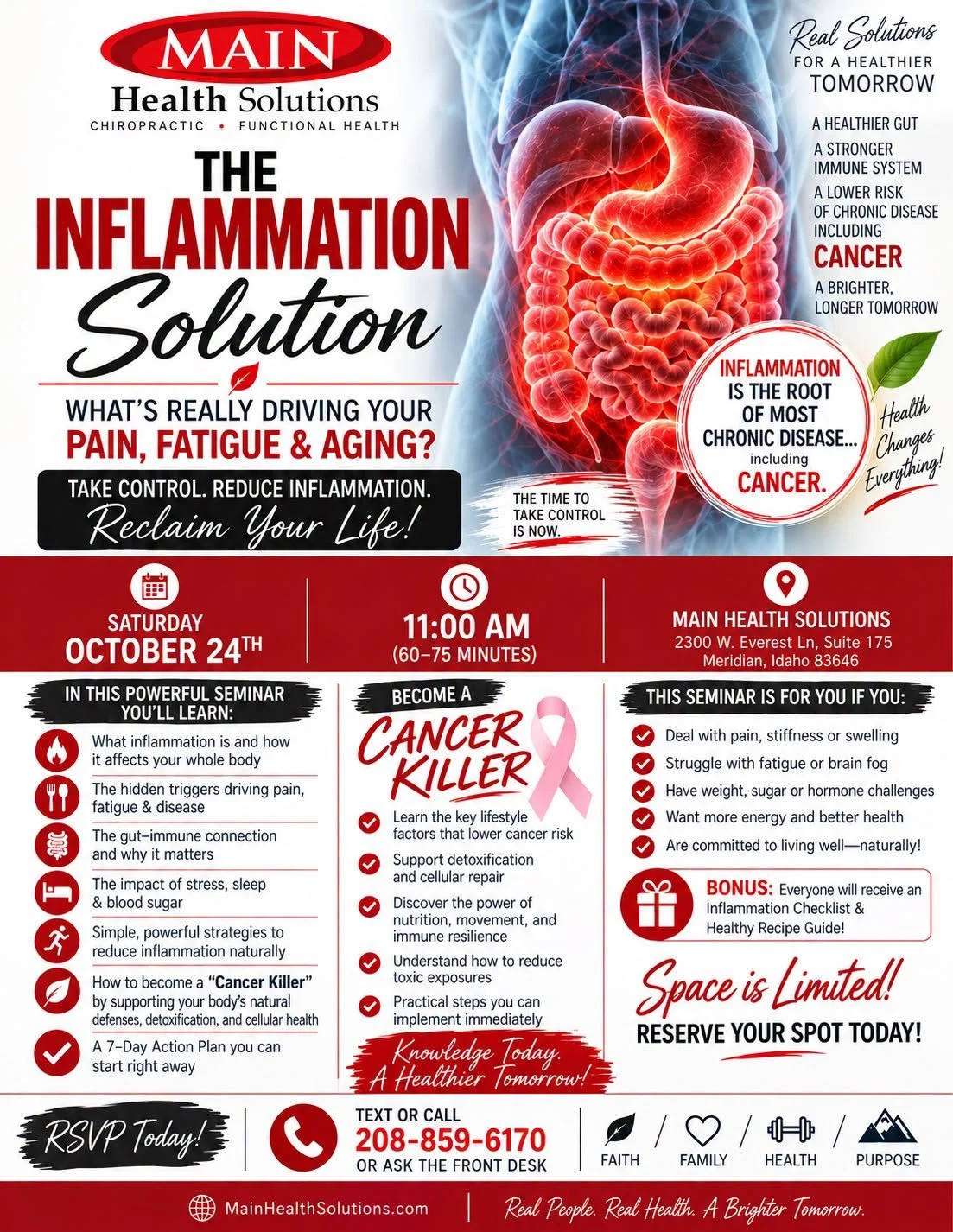
If you are tired of guessing about your health, we invite you to attend:
The Inflammation Solution Seminar
Saturday, October 24, 2026, at 11:00 a.m.
Main Health Solutions
2300 W. Everest Lane, Suite 175
Meridian, Idaho 83646
During this educational seminar, you will discover:
* Common lifestyle factors that can keep the inflammatory alarm activated
* The connection among nutrition, blood sugar, stress, sleep, and movement
* How chiropractic and functional health evaluations may fit into a personalized plan
Call or text 208-859-6170 to reserve your seat or click here to find out more
You can also contact our team to schedule an evaluation and say:
“I’m ready to discover what may be standing in the way of better health.”
Your body is not your enemy, and your symptoms are not character flaws. They are information.
Do not settle for endlessly chasing symptoms. Begin identifying the obstacles, strengthening your foundations, and giving your body the support it needs to function at its best.
Dr. Rosie Main, DC, CFMP
Main Health Solutions
Chiropractic & Functional Health
2300 W. Everest Lane, Suite 175
Meridian, Idaho 83646
Call or text: 208-859-6170

This article is intended for educational purposes only and is not a substitute for individualized medical advice, diagnosis, or treatment. Consult an appropriate healthcare professional regarding persistent symptoms, medications, dietary changes, supplements, and new exercise programs.